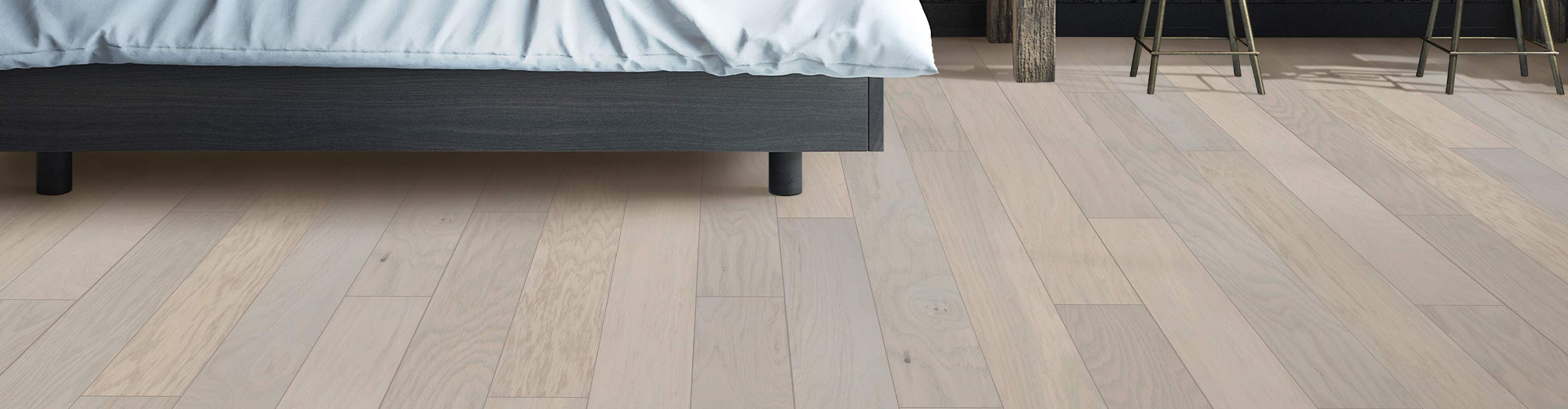
As your local flooring experts, we're here to help you weigh two of the most popular options for your home: carpet and hardwood. Both bring real strengths to the table, but the right pick depends on the room, your household, and the look you're after.
Carpet is soft, comfortable, and available in an enormous range of colors and styles. Nylon fiber offers reliable stain resistance and durability for busy households, polyester combines style and sustainability, triexta builds stain protection directly into the fiber itself, and olefin holds up well in moisture-prone or indoor-outdoor spaces.
Hardwood brings timeless style and lasting value to a home. With a wide range of species, stains, finishes, and plank sizes, hardwood can support nearly any aesthetic, from coastal to craftsman, rustic to contemporary. Engineered hardwood has expanded those options even further, opening up wood floors to spaces once considered tricky for solid planks.
Read on to explore how each material performs in comfort, style, and durability, so you can choose the floor that fits your life best.
Carpet fiber options vary, and all carpet will lose some value over time as it ages.
Hardwood's investment depends on species and quality. Softer woods like pine tend to sit at the lower end of the range, harder domestic species like oak sit in the middle, and exotic species represent the higher end. Engineered hardwood is generally a bit more affordable than solid wood. The trade-off is longevity: hardwood floors can last 35 to 40 years and can raise a home's resale value.
Hardwood styles introduce new textures and finishes every year. Within a category known for its timeless appeal, current trends lean toward wider planks, matte finishes, and bolder grain patterns.
Carpet offers an almost unmatched range of colors, patterns, textures, and pile styles, giving you plenty of room to express your home's personality.
Both carpet and hardwood installation are best left to professional installers for the cleanest, most durable results.
Hardwood installation depends on species, plank size, room size, and location. Carpet installation typically takes less time than hardwood, but it still requires skilled stretching and seam work to avoid a rough or uneven finish. Professional installation helps prevent exposed seams and loose spots down the road.
Carpet paired with a quality pad offers noticeably better sound insulation than hardwood, cutting down on noise from foot traffic within a room and between floors.
Hardwood isn't naturally sound-absorbing on its own. Nail-down installations, in particular, can carry impact noise straight to the subfloor.
Nylon fiber holds up well against stains and daily wear, while polyester tends to show wear a little faster under the same conditions. Triexta achieves its stain protection through the structure of the fiber itself rather than a surface treatment, making it a practical pick for households with kids or pets.
High-quality solid hardwood can be refinished multiple times and last for decades with proper care. Engineered hardwood offers comparable durability for most homes.
Flooring cost comes down to more than the number on the price tag. Product cost, installation, and how often you'll need to replace the floor all factor into what you actually spend over time.
Carpet costs vary by fiber type and construction. Polyester tends to be the most budget-friendly entry point, while triexta sits at the higher end of the residential range. One important factor in the long-term math is the replacement cycle: most carpet gets replaced every 7 to 15 years, depending on traffic, pets, and how well it's maintained.
Hardwood costs vary significantly by species. Engineered hardwood is often a bit less per square foot than comparable solid wood.
The long-term value case for hardwood is strong. A well-maintained hardwood floor can last 35 to 40 years, can be refinished to address wear and scratches, and is consistently recognized by buyers as a premium feature. For a closer look at hardwood species and pricing by type, see our hardwood flooring guide.
When you switch to hardwood flooring, you'll have the option to refinish the planks when needed, keeping them looking radiant while protecting them from damage. With proper care over the years, refinishing can erase damage from scratches and fading.
If you live in a warm climate, it's worth considering how humidity can affect hardwood floors after switching from carpet. As outdoor temperatures rise, the amount of water vapor in the air increases and eventually makes its way inside. Air conditioning and dehumidifiers can help manage indoor humidity, but if it goes unchecked, you may see swelling, warping, cupping, or cracking in your planks. In areas with big seasonal swings, engineered hardwood may be a better fit for resisting moisture.
Once your hardwood floors are installed, you can bring back some of the warmth and softness you had with carpet by adding throw rugs, area rugs, and runners.
When you're ready for a flooring cost estimate, reach out to your local flooring store to get started.
In most markets, hardwood is seen as a premium feature that appeals broadly to buyers. Real estate professionals consistently rank it among the features that support a higher asking price and a faster sale. That said, carpet in bedrooms is often expected and well received, especially in family-oriented markets. The combination that tends to perform best on resale is hardwood in main living areas with carpet in bedrooms, though local buyer preferences vary. A local flooring expert can help you think through what makes sense for your home and market.
Neither material is universally better. The right choice depends on the room, your household, and what you value most in a floor. Hardwood is easy to clean, lasts a long time, and adds resale value. Carpet is warmer, quieter, softer underfoot, and a lower upfront investment. Many homeowners end up with both, hardwood through main living areas and carpet in bedrooms, so each space gets the material that suits it best.
Kitchens and bathrooms are the two spaces where carpet tends to struggle. Both see regular moisture, spills, and humidity that carpet fiber absorbs and holds over time, which can lead to odor, staining, and subfloor damage. Entryways face a similar challenge: heavy foot traffic and tracked-in dirt and moisture wear carpet down faster than almost any other area of the home. For any space that sees regular water, food, or heavy tracked-in debris, a hard surface is the more practical long-term choice.
Both have trade-offs. Hardwood is easy to wipe clean after muddy paws and pet accidents, and it doesn't hold pet dander or odor in the fiber the way carpet can. On the other hand, pet nails can scratch hardwood surfaces, and hardwood offers less traction for dogs, which can matter for older or larger animals. Carpet gives pets better grip and cushion, easier on their joints, but it needs more diligent cleaning to prevent odor and staining from settling into the fiber. In a pet household, a triexta or nylon fiber with a tight, dense construction is the most durable and cleanable option.
Hardwood is generally the better choice for households where allergies are a concern. Hard surfaces don't trap pet dander, dust mites, pollen, or other airborne particles the way carpet fiber does. Regular sweeping or vacuuming removes allergens from the surface without the deep cleaning carpet requires to achieve the same result. Carpet can harbor allergens in the pile even after vacuuming, and some cleaning products or padding materials can introduce additional irritants. Still, carpet isn't automatically a poor fit for allergy households. Low-pile, tightly woven carpet vacuumed frequently with a HEPA filter is a significant improvement over high-pile options, and some households find the reduction in airborne dust actually helps. Maintenance frequency and fiber selection make the difference.
Thank you for contacting Carpet One Floor & Home. Your local flooring expert will reach out to you regarding your inquiry.